

7 Brutal Challenges of Running a Restaurant in 2026
7 Brutal Challenges of Running a Restaurant in 2026
From the outside, running a restaurant looks glamorous. Beautiful food, busy dining rooms, happy customers. But ask any owner what it's really like, and you'll hear a different story: the challenges of running a restaurant can push the toughest people to breaking point.
Here's what's actually happening in 2026:
1 in 9 cafés and restaurants in Australia closed their doors in the past 12 months. According to CreditorWatch, past due debt is now higher in hospitality than any other industry in the country. The 2026 wage rise landed in the mid-5% range, payday super hit July 1, and the RBA expects inflation to persist into 2028.
These are the 7 brutal challenges every café, restaurant, bar and takeaway owner faces in 2026, and what the operators who survive actually do about them.
Challenge #1: Thin Margins and Cash Flow Pressure
Most cafés, restaurants, bars and takeaways in Australia are barely scraping by. Rising food costs, the July 2026 wage rise, and higher utilities eat into already tight margins. Most owners quietly admit they've gone months, sometimes years, without paying themselves fairly. They keep the doors open by underpaying the one person in the building who built it.
The fix is doing less, better. We have watched owners spread themselves across five businesses with three of them losing money. The play is to cut what's bleeding and double down on what works. Pull a profit and loss report every month, take 25% of the profit out of the bank account and put it in a separate tax account so you don't get caught later. Keep a separate super account that gets paid weekly.
Members like Izzy added an extra $300K to her existing business in 2025 by changing how she operated, not by adding more locations.
Challenge #2: Owner Burnout and Operator Dependency
This isn't a 9-to-5 job. It's early mornings, late nights, weekends, public holidays, often with no break for months. Most owners start passionately. Over time the business stops being a dream and becomes a prison.
Every decision lands on your phone. Every fire gets your weekend. Every dollar question comes back to you. The industry calls this operator dependency, and it's the real problem behind burnout. The reason your team keeps coming back to you is because you are their Google. They don't have to retain training because you're there to solve it for them. So they don't.
The fix is uncomfortable. Pick a day this week, turn off your phone, and don't turn up. When you come back the next day and something's broken, don't get angry, get curious. Was that a system problem or a training problem? Fix the system, retrain the gap, then take two days off. Then four. Every fire you don't show up for becomes a system that fires you in slow motion or a system that finally gets built. The 48-hour test confirms it: if you can't disappear for 48 hours and the business runs, the business owns you. Delegating properly is how you stop being the bottleneck.
Challenge #3: Staff Shortages and the Wrong-Hire Trap
Finding and keeping good staff has become one of the toughest restaurant challenges. Most cafés, restaurants, bars and takeaways face fewer skilled workers entering the industry, higher staff expectations around pay and flexibility, brutal turnover that disrupts service, and younger team members wanting fewer hours.
The result is staffing gaps that force owners to pick up shifts, train constantly, and cover mistakes themselves. The cycle never ends, because the owner is the only one who knows how everything actually works. And every owner has been burnt by the toxic culture fit they didn't catch in the interview.
The fix is refusing to hire out of desperation. Real reference checks first, and not just the references the candidate gave you. Use LinkedIn to find someone else at the same company. Then use Australia's six-month probationary period properly: monthly 360 peer reviews from the team they actually work with, and a values fit check at every milestone.
If someone's a no, let them go in lieu of one week's notice while you still legally can. Be willing to be short-staffed for two more weeks to get the right person. The wrong hire costs you ten times their wage in culture damage. Real staff incentives that work come down to culture, not pizza Fridays.
Challenge #4: Rising Costs and Customer Spending Pressure
Everything will be more expensive in 2026. Produce, milk, coffee, wages, insurance, energy, fit-outs. The RBA expects inflation to persist into 2028, so this isn't a short-term problem to wait out.
Meanwhile, customers are more cautious with their spend but still expect great service and value. Most owners respond by discounting. CK Chin's math says you lose twice: you devalue your product, then you tell every future customer you were worth less than you said. Never decrease, add value.
Lift average customer spend instead [get our FREE resource]. Sit down with your team and brainstorm how to squeeze an extra $15 to $20 a head through the door you already have open. Better menu structure, smarter upsells, premium positioning at the cocktail and dessert end. Then sit down with your customers and ask what they love about coming back.
You're better off pissing some people off and having a go at not being broke than not pissing anyone off and going broke anyway. Add AI tools where they help: the Department of Industry is funding AI pilots in hospitality right now, and the operators who adapt early win twice.
Challenge #5: Operational Chaos in the Kitchen
Inside the kitchen, production and management bring their own pressures. Consistency in dishes, avoiding cross-contamination, hitting tickets in the window during a Friday night rush. On top of that, inventory mismanagement creates waste, eats into profits, and increases food safety risks.
Good kitchen operations rest on three non-negotiables:
Weekly food and beverage counts, physically done. Not estimated. Rabih Yanni at Botanical Hotel in South Yarra runs it harder: the person ordering isn't the person receiving, and the person counting isn't the person cooking. Three sets of eyes, full segregation, a variance report on the desk every Tuesday afternoon with explanations not excuses.
A flash revenue and cost journal in your inbox by Monday lunchtime. Food purchases, beverage purchases, food sales, front-of-house labour, back-of-house labour, all compared against last week and the same week last year. That's how Tony Kelly runs his businesses.
No roster goes out without a forecast next to it. What do you think revenue will be? How many covers? Until that's signed off, no roster is posted.
Most kitchen problems can be solved with a pen, a roster, a menu, or a wine list. The owners who know their numbers by lunchtime Monday make decisions everyone else makes a month too late.
Challenge #6: The 2026 Wage Hike and Payday Super Squeeze
Payroll is another huge pain point. Between overtime, penalty rates, shifting rosters, and now payday super, it's easy to lose control.
Payday super will land July 1, 2026, which means superannuation gets paid every payroll cycle, not quarterly. Cashflow tightens immediately, especially for any business already behind on ATO debt or super payments. Combined with the 2026 wage rise sitting in the mid-5% range, wage blowouts have become a hidden drain on profits for most cafés, restaurants, bars and takeaways.
The fix? Start paying super weekly now. Not on July 1. Now. By the time it becomes law, it's a non-event because you're already doing it. Open a separate super account that gets paid weekly alongside wages and PAYG. Set up a proper roster and payroll system that automates compliance. And calculate your true labour cost as gross wages plus tax plus super, all three added together. If that's sitting north of 30% of revenue, you don't have a labour problem, you have a revenue problem. Cutting hours is the wrong move. Lifting average customer spend is the right one.
Challenge #7: Protecting the Human Side, Family, Team, and Guests
Many cafés, restaurants, bars and takeaways in Australia are family businesses, run by couples, siblings, or generations working together. The bonds can be powerful. They can also blur every line between work and family life. Stress from staffing gaps, unpaid bills, or poor budgeting doesn't just hit the business, it hits marriages, kids, and family wellbeing.
The fix is two clear rules.
Defined roles. Whether it's a husband-and-wife partnership or four mates who started together, every owner needs a specific zone and a hard rule that nobody else crosses it. Most fights between partners are not about effort, they're about expectations.
A non-negotiable boundary on the calendar. Tony Kelly runs multiple restaurants and one of his golden rules is weekends belong to his wife and his kids. It doesn't matter when he gets up or when he gets home midweek. Saturday and Sunday have a hard line around them. If something has to break it, the kids come too.
Through all this, one truth holds: hospitality is about making people feel welcome. Rabih Yanni, who's been running businesses for 33 years, puts it simply: guests buy from who they trust.
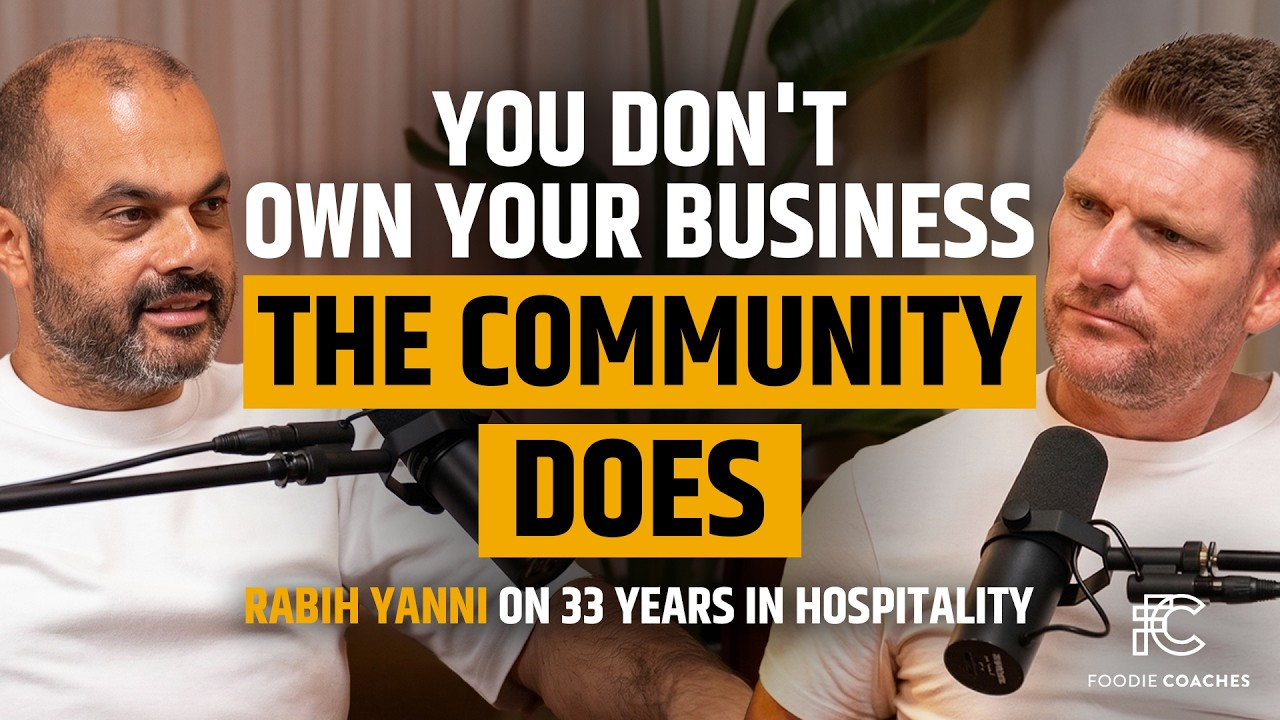
Listen to his episode on Make Restaurants Profitable.
The cafés, restaurants, bars and takeaways that thrive long-term protect three things at once: the family, the team, and the guest experience. None of those three works without the other two.
Building a Resilient Restaurant Business
The challenges of running a restaurant are real and they're relentless: thin margins, owner burnout, staff shortages, rising costs, kitchen chaos, payroll pressure, and the constant weight of protecting the human side. But they're not unbeatable.
The owners who survive and succeed all do the same things: know their numbers cold (weekly not monthly), step out of the daily grind and into actual leadership, build a team and culture that runs without them, use the right technology for inventory, payroll, and scheduling, and protect profitability while still delivering an experience worth coming back for.
Members like Izzy added an extra $300K to her existing business in 2025 by changing how she operated. Richard and Jade hit 10% profit at their Sydney Mexican restaurants in six months after fixing their numbers, having previously been three months behind on rent despite lines out the door. The work is hard. The path is known.
Take the Next Step
If you're an operator doing $10K+ a week and you're stuck on profitability, staffing, or burnout, the Profit Finding Session is where you start. It's where we look at your numbers with you and show you exactly where the gap is.
For owners ready to go deeper, applications are now open for The Back Room (5 spots a month) and Elite Mastermind (10 spots a month). Both are application-only with an interview process. We're not for everyone, and that's the point. If you want in, apply and we'll book the interview.
Frequently Asked Questions
What is the biggest challenge of running a restaurant?
The biggest challenge is operator dependency — the owner being the 24/7 Google tab for the team.
Most owners don't realise they're the problem. Every decision routes through you. Every fire gets your phone call. The business doesn't run, it runs you. Most owners think the problem is something external, the wages going up, the slow Tuesday, the chef who quit. The biggest lie owners tell themselves is that it's everything else but them. Fix that one belief and the rest gets fixable.
How do you stay profitable as a restaurant owner with rising costs?
You stay profitable by lifting revenue per customer, not by cutting your way out.
The 2026 wage rise landed in the mid-5% range plus payday super hit July 1, which means cashflow is tighter for every café, restaurant, bar and takeaway. Most owners respond by cutting hours or trimming the team. Wrong move. If your true labour cost (wages + tax + super) is sitting north of 30% of revenue, that's a revenue problem, not a labour problem. Lift average customer spend by $15-20 a head through better menu structure, smarter upsells, and premium positioning. That's where the margin lives.
How do you stop a restaurant from owning you?
The 48-hour test. If you can't disappear for 48 hours and the business runs without you, the business owns you.
The most successful restaurants don't have the owners working inside them. That's not coaching theory, that's the data across 2,500+ café, restaurant, bar and takeaway owners. Step one is take a single day off this week. Whatever fires happen in that 24 hours, you build a process to either eliminate the fire or train your team to handle it. Next week take two days. Then four. There's no secret. Just basic things done well, consistently, over time.
How do you handle staff shortages in hospitality?
You handle staff shortages by refusing to hire out of desperation.
Most owners do the opposite. The team is short, service is suffering, so they throw the first half-decent person on the floor. Six months later that hire has cost them ten times their wage in damage to the culture. The fix is a six-month probation, real reference checks (most people skip these), and a culture that's strong enough to make the wrong people leave on their own. Be willing to be short-staffed for two more weeks to get the right person.
Is owning a restaurant worth it?
Owning a restaurant is worth it only if you build a business, not a job.
Most owners get trapped in the model they created. Working twelve-hour days, no holidays, on the tools, watching the bank account stay flat. That's not a business, that's a self-employed prison. The owners who make it work treat the business like an asset. They build systems. They train managers. They take the time off. And they review their numbers every week, not every quarter. If you're doing all the work and still not making money, the answer isn't more hours. It's a different model.
Ready to find out what's actually leaving money on the table? Apply for The Back Room or Elite Mastermind.
