
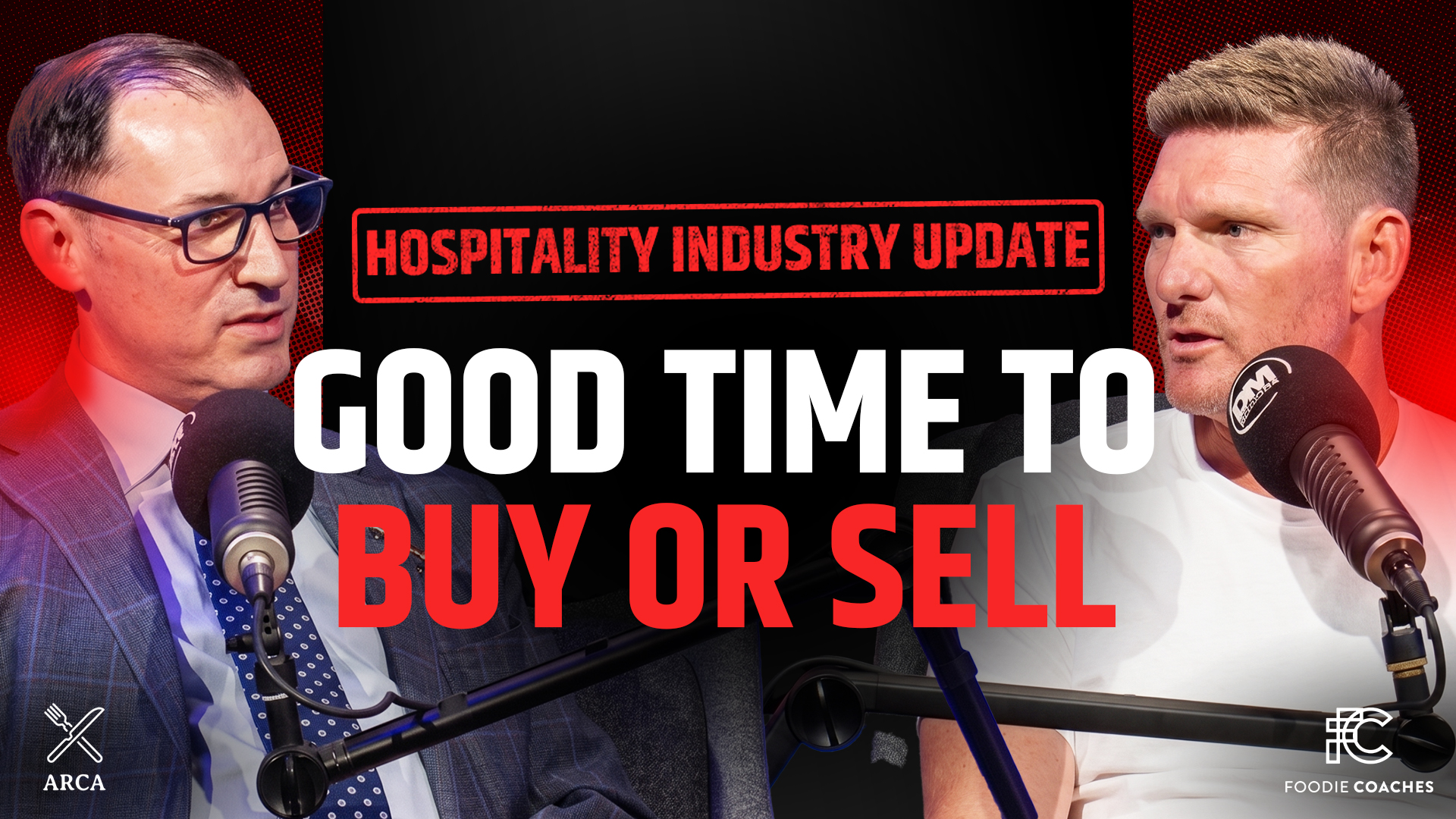
Hospitality Industry Update (July 2026): The Hospitality Buy and Sell Market Is Red Hot in 2026
The hospitality buy and sell market is the busiest it's been in years.
On one side, operators are opening site after site. In the last three weeks alone, the operators inside the Back Room program had six new openings between them. Model sorted, offer sorted, pricing sorted, and they're moving.
On the other side, operators are quietly heading for the door. Restructures. Debt cleanups. Owners sitting across the table saying "I think we're done." Both things are happening at once, and both are happening for the same reason.
After working with 2,500+ café, restaurant, bar and takeaway owners over the past decade, we've learned to read a market like this. When deals move fast in both directions, it's not chaos. It's a squeeze. The July and October cost changes are pushing tired operators toward the exit, and that's opening up the exact sites, fit-outs and locations the strong operators have been waiting for.
Wes Lambert from the Australian Restaurant and Cafe Association put it plainly in our latest industry update: the market is red hot, and the time to act is now.

Here's what's driving it, what your business is actually worth, and how to make the right move whichever side of the table you're on.
Why the hospitality buy and sell market is red hot right now
The market is moving because a wave of cost changes has forced a lot of owners to make a decision. Some are choosing to expand while the deals are good. Others are choosing to walk away before it gets harder. Both decisions are rational, and both are creating opportunity for the operators who are ready.
Wes reported a run of enquiries from organisations looking for a business broker, and a clear acceleration in operators buying and selling. When operators start throwing in the towel, the sites don't sit empty for long, because someone else is ready to take over a running business rather than a closed one.
That's the quiet advantage in this market. Taking over a business that's still trading is a completely different job to reviving a dead one.
Two kinds of owners: the expanders and the exiters
Whichever side you're on, the winning move is the same: get your numbers and structure right before you act.
The expanders are buying because their model works and they can prove it. The exiters are getting out because the last twelve months have taken the fun out of it. Neither is wrong.
If you're crushing it, the question isn't "should I grow." It's "what's my big vision, and how do I capitalise on a market where good sites are opening up." If you're finding it tough, the question is "do I restructure and go again differently, or do I sell and go do something else." Both of those are fine answers. There's no shame in either.
What sinks people isn't the decision. It's making the decision without the numbers in front of them.
What's pushing operators to the exit
A stack of cost changes landed at once, and it's tightening cash flow across the industry. For owners who were already stretched, it's the thing that tips the decision toward selling.
Here's what's hit:
Payday Super went live on July 1st. Super now has to be paid every pay cycle, not quarterly. A few pay runs in, there haven't been major problems reported, but it pulls cash forward and it catches out anyone who wasn't ready.
The card surcharge ban starts October 1st. Businesses will have to absorb Visa, Mastercard and other merchant fees themselves, with no way to pass them on. Wes estimates hospitality alone will wear up to a billion dollars in merchant fees, and calls it the single biggest change to payments in Australian history.
On top of that: the minimum wage rise, the increase to what you pay migrant workers, the end of junior rates, and general hospitality inflation running around four percent. Wes's read is that an owner who won't offer a cash discount should plan for roughly a ten percent price rise across 2026 just to hold the same margin.
For a strong operator, that's a pricing exercise. For a tired one, it's the last straw.
What a hospitality business is actually worth in 2026
Unless you're a medium to large group, goodwill barely exists, so most sales land between one and two times earnings. Sometimes three times earnings in the best scenarios, and any liabilities can wipe that out. It's not the multiple you'd get on other assets, and going in expecting a five times return is how sellers get stuck.
Wes was blunt on this: if you're selling, there is a buyer out there, but you may have to change your expectations. In a lot of cases, getting out clean with no liabilities is the win. Negotiate a good deal, but price it to the market that exists, not the one you hoped for.
This is exactly why the numbers have to be right before you list. A business with clean books and a clear earnings figure sells. A business with a shoebox of receipts and a rough guess does not.
If you're expanding: get your model and structure right first
Growth exposes whatever's already broken, so fix the foundation before you add a second site. The operators expanding successfully right now aren't lucky. They nailed the model, the offer and the pricing on site one, and they're stamping that same thing onto the sites the market is opening up.
Before you sign on a second location, get clear on what the acquisition actually does to your structure and your tax position. The right site in the wrong structure can cost you more than the deal is worth. This is a conversation to have with an advisor before you commit, not after.
Watch the StartUp Series on YouTube for where we sit down with the specialists on getting your structure, design, numbers and marketing right from day one, so you build on solid ground before you scale.
If you're exiting or restructuring: do it clean
Restructuring or selling isn't failure, but it does need to be done properly, and the tax rules have changed. It is completely okay to say "I'm going to sort this out and go again differently," or "I'm going to sell and do something else." What's not okay is walking into it blind.
Two changes matter here. Capital gains tax and negative gearing law changes have already passed Parliament. It's done, it isn't changing, and it means you'll need your assets valued at 30 June or 1 July 2027 to set a baseline for future capital gains tax. That's an action item now, not later.
The second is the trust change still working through. The looming issue is double taxation, where income is taxed inside the trust and then taxed again when it's distributed. A lot of café and restaurant businesses are set up in trusts and unit trusts. ARCA is advocating hard against the double taxation, and to make sure owners aren't stung with stamp duty just to restructure from a trust into a company. But you can't wait on the outcome. If you're operating in a trust, this is the time to get advice on what your structure should look like.
Don't take this to the guy next door who heard something from his mate at the pub. Take it to your advisor.
Why this matters in 2026
Margins are tighter than they've been in a decade, and the pressure isn't easing soon. Consumer sentiment is down, spending is volatile month to month, and interest rates could tick up another quarter percent. Wes expects the cost-of-living and cost-of-doing-business squeeze to run into the middle or end of 2027 before inflation settles back into the RBA's band.
That's the backdrop to every buy, sell or restructure decision being made right now. It's also why the market is moving. Pressure forces decisions, and decisions create deals.
It isn't all doom and gloom. If you're in a good spot, this is one of the best windows in years to expand on your terms. If you're in a tough spot, there's a real chance to turn the whole thing around by making the right decisions, taking the right calls, and getting on the front foot. Either way, the power to decide is yours. The only wrong move is doing nothing and letting the market decide for you.
Take the next step
Whether you're buying, selling or restructuring, the first move is the same: get your numbers and your structure in front of someone who knows the rules.
Foodie Coaches Accounting works with café, restaurant, bar and takeaway owners every day on exactly this. Structure, tax, valuations, and getting your books clean enough to buy or sell with confidence. With Payday Super live, the surcharge ban coming, and the trust and capital gains changes landing, getting in front of it now is the difference between a smart move and an expensive one.
Make an enquiry with our accounting team and we'll walk you through where you stand.
Want the full market breakdown? Hear Tim Kummerfeld and Wes Lambert break down the whole industry update in this month's episode.
